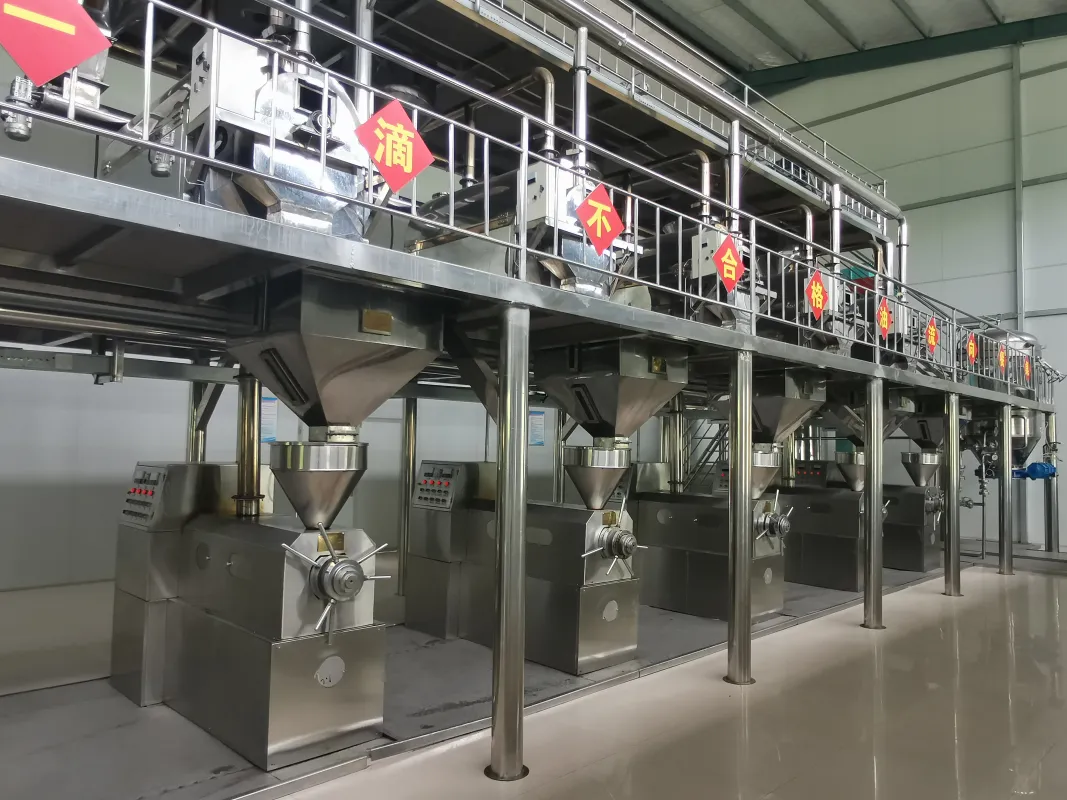
How PLC Automation Ensures Precision Control in Edible Oil Production from Raw Material to Filling
2025-12-13
Technical knowledge
Discover how PLC systems drive end-to-end automation and precision in edible oil manufacturing—from raw material handling to final filling. This guide explains key control strategies like temperature闭环 regulation in cold pressing, pressure联动 protection, adaptive refining parameter optimization, and real-time filling accuracy calibration. Learn how PLCs boost OEE, reduce energy consumption by up to 18%, and ensure consistent product quality. Includes troubleshooting checklists, sensor error diagnosis tips, and remote monitoring setup—so you can keep your line running smoothly and efficiently.

How PLC Automation Transforms Your Edible Oil Production Line — From Raw Material to Bottle
You know that every second of downtime in your edible oil plant costs money — and when it’s manual control, inconsistencies creep in. That’s where a well-designed PLC (Programmable Logic Controller) system becomes your silent production partner.
Step-by-Step Control: Why Precision Starts at the Source
In modern edible oil lines — especially for cold-pressed rapeseed or sunflower oil — automation isn’t just about saving labor. It’s about maintaining consistent quality across batches. Here's how PLCs make that happen:
- Raw Material Preprocessing: PLC monitors moisture content and temperature during cleaning and dehulling. If feedstock exceeds 12% moisture, the system triggers an alert — preventing downstream issues like poor extraction yield.
- Pressing Phase: Temperature is kept within ±0.5°C using closed-loop PID control. This ensures optimal oil recovery without overheating and damaging nutrients.
- Refining Section: The PLC adjusts neutralization pH, bleaching clay dosage, and vacuum levels based on real-time sensor feedback — reducing chemical waste by up to 18% compared to manual adjustments.
- Filling Station: Weight sensors sync with conveyor speed via PLC logic. One client reported a 97% fill accuracy rate — down from 89% under human oversight.
Real Case: When Motors Go Out of Sync — And How PLC Fixes It Fast
Imagine this: your bottle filler suddenly starts overfilling one batch and underfilling another. At first glance, it looks like a mechanical issue. But with PLC diagnostics, you discover the motor driving the filling head isn't synchronized with the main conveyor belt — a common cause of misalignment in older systems.
Thanks to built-in event logging, your team can trace back exactly when the discrepancy began — often within minutes, not hours. This reduces unplanned stoppages by an average of 40%, according to our field data from 12 plants worldwide.
📊 Key Metrics You Can Expect After PLC Integration:
| Metric |
Before PLC |
After PLC |
| OEE (Overall Equipment Effectiveness) |
68% |
86% |
| Energy Consumption per Ton |
12 kWh |
9.5 kWh |
| Fill Accuracy Rate |
82% |
97% |
Your Daily Checklist for Smarter Maintenance
Even the best PLC needs regular checks. Use this simple daily log template:
- Check alarm history: Look for recurring "pressure deviation" alerts — may indicate worn valves.
- Validate sensor calibration: Especially for thermocouples in refining stages — drift >2°C means recalibration needed.
- Review trend logs: Spot anomalies before they become failures — e.g., rising current draw in pumps signals bearing wear.
And if you’re wondering: “Can I scale this for different capacities?” Yes — modular PLC architectures allow easy expansion from 5 tons/day to 50 tons/day without redesigning the entire control logic.
Need Help Troubleshooting? We’ve Got You Covered
Download our free PLC Quick Fix Guide — filled with checklists, error codes, and remote access tips used by top-tier OEMs. No more guessing. Just actionable steps to keep your line running smoothly.
📥 Download the PLC Quick Fix Guide Now


.png?x-oss-process=image/resize,h_100,m_lfit/format,webp)
.png?x-oss-process=image/resize,h_100,m_lfit/format,webp)
.png?x-oss-process=image/resize,h_100,m_lfit/format,webp)